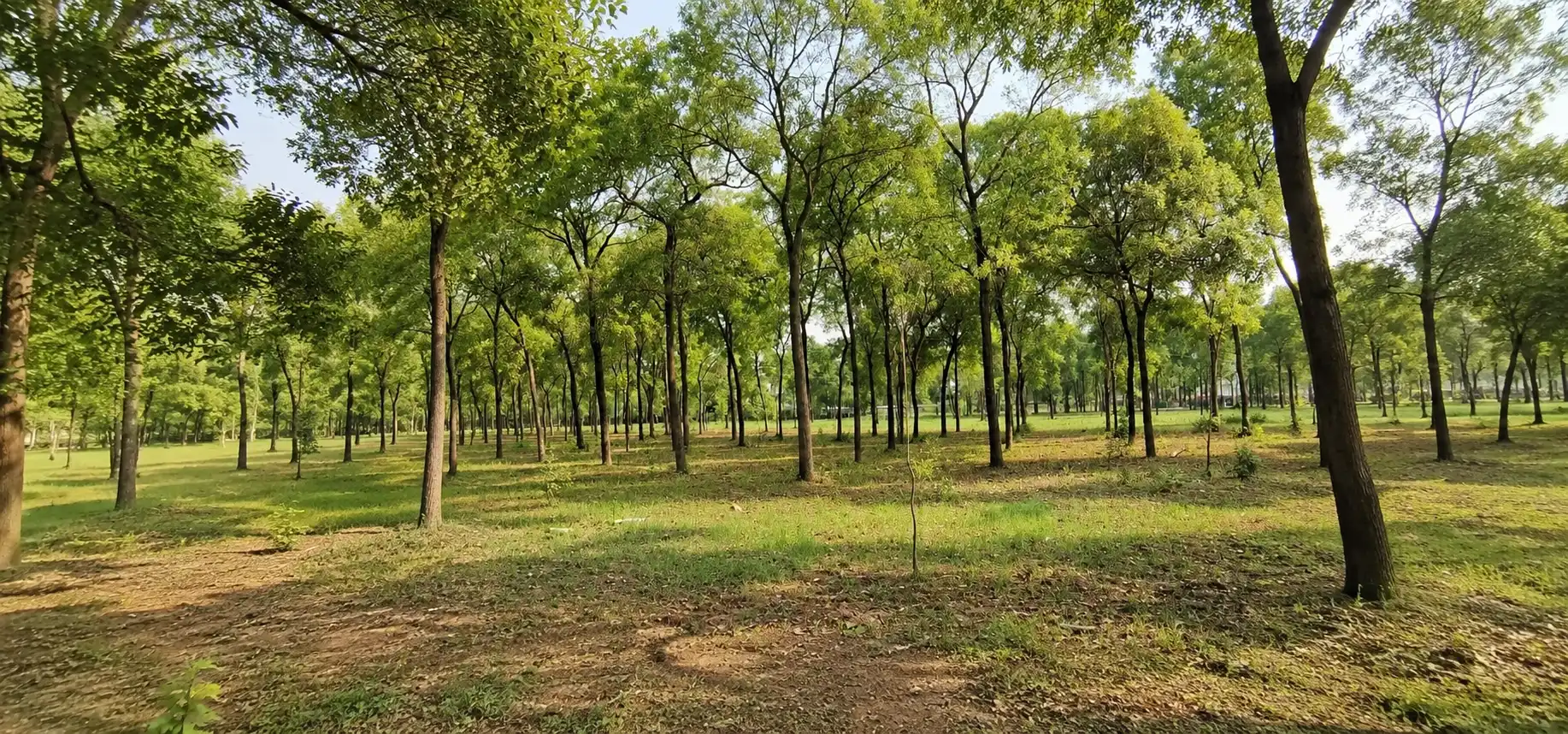
Trees sequester carbon, but the honest story includes permanence, scale and the difference between growth and credits.
Published 2026-01-20, Updated 2026-07-08, By Shree Editorial Desk
Quick answerGrowing trees sequester carbon, so a red sandalwood plantation does have a genuine climate dimension. But honest carbon accounting is more nuanced than "trees = green": sequestration depends on growth and biomass, some carbon is released at harvest, and there’s a real difference between a plantation quietly storing carbon and one making formal, verified carbon-credit claims. This article makes the genuine environmental point while being clear about the caveats, because overstating carbon benefits is a common greenwashing trap, and credibility here comes from precision, not slogans.
The genuine point
As trees grow, they take up and store carbon in wood and roots. A plantation on previously bare or degraded land does add carbon storage and tree cover, a real, if modest, environmental benefit.
The honest caveats
Sequestration scales with growth and biomass, slow-growing trees store carbon slowly.
Harvest releases some stored carbon, depending on how the timber is used.
A plantation storing carbon is not the same as one making verified carbon-credit claims.
Beware the greenwashing trap
Vague "carbon-positive" or "net-zero" claims without methodology are marketing, not accounting. If carbon credits are ever offered as part of a return, ask for the verification standard and be sceptical of unbacked claims.
Our position
We’d rather state the modest, honest climate benefit than overclaim it. For the broader sustainability picture and its caveats, see our article on whether red sandalwood farming is sustainable.
SH
Shree Editorial Desk
Shree Properties & Projects, editorial
Run the ten checks on us
Request the due-diligence pack and hold us to this guide.