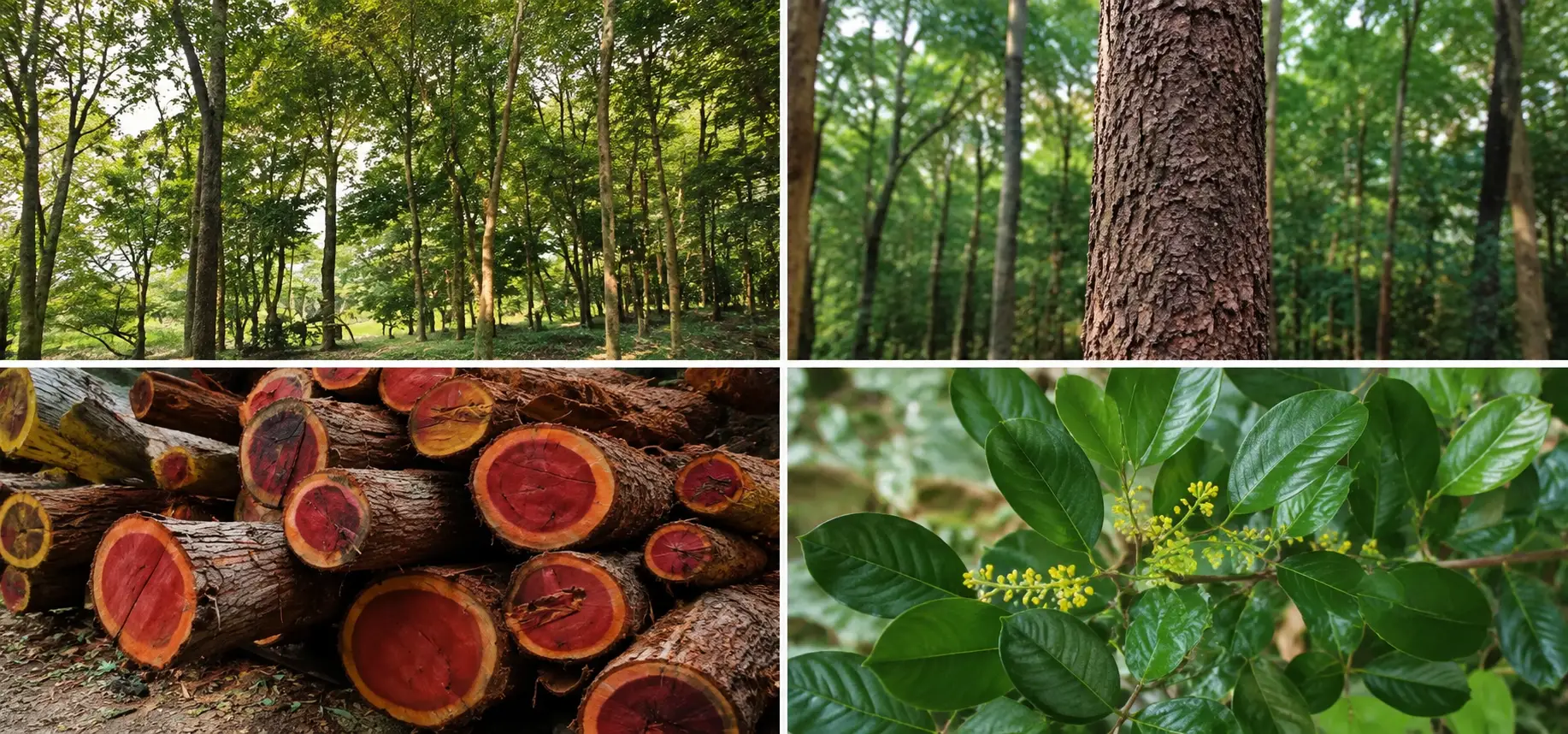
Pruning and Canopy Management in a Red Sandalwood Plantation
Light, purposeful pruning can improve form and timber quality. Here’s where it fits, and where less is more.
Published 2024-08-20, Updated 2026-07-05, By Shree Editorial Desk
Quick answerPruning in a red sandalwood plantation is about improving tree form and, ultimately, timber quality, removing damaged or poorly placed branches and encouraging a straight, sound trunk. It is generally light and purposeful rather than heavy, since the goal is a good main stem over the long term, not aggressive shaping. This article explains how pruning and canopy management fit the crop and why restraint matters, over-pruning stresses trees and helps no one. It is general horticultural orientation, not a prescriptive schedule.
Why prune at all
The aim is a straight, sound main stem that yields good timber. Light pruning removes damaged, diseased or poorly placed branches and supports clean trunk development over the plantation’s long life.
Light and purposeful
Focus on form and trunk quality, not heavy shaping.
Remove damaged or competing branches at sensible times.
Let the canopy develop naturally as blocks mature.
Why less is often more
Over-pruning stresses trees and can slow growth. For a slow-growing species where the long-term trunk matters most, restraint usually beats intervention. The canopy closing over the years is part of healthy development, not a problem to fight.
Fits the bigger picture
Pruning is one modest part of maintenance across the horizon. See maintenance & monitoring and our methodology. General orientation, not a prescriptive schedule.
SH
Shree Editorial Desk
Shree Properties & Projects, editorial
Run the ten checks on us
Request the due-diligence pack and hold us to this guide.