
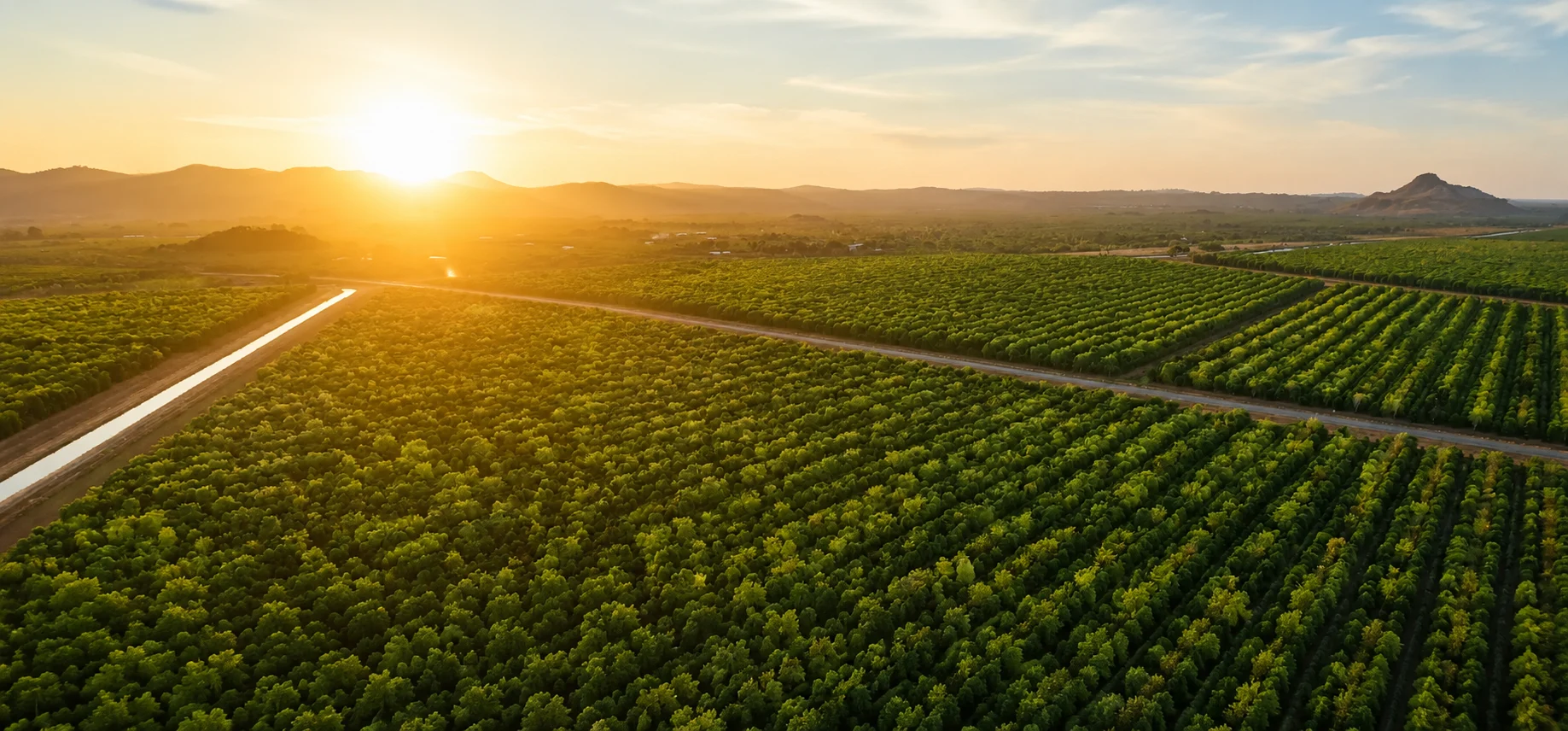
It starts with the right site and stock
Red sandalwood is fussy about drainage and forgiving about drought. Cultivation begins on well-drained red laterite or gravelly soils, waterlogging kills young trees faster than dry spells do, using certified planting stock chosen for form and vigour. Spacing matters: a managed density of around 100 plants per acre gives each tree room to develop over decades.
Establishment: years 1 to 2
The first two years are the highest-risk, highest-care period. Drip irrigation carries the saplings through establishment, crews weed and protect the young trees, and any early losses are replanted. Survival is tracked block by block, honest operators count their losses rather than hide them.
The long middle: years 3 to 10
This is where patience is tested. The canopy closes, trunks thicken, and, critically, heartwood slowly begins to form. There is no way to accelerate this; heartwood accumulation is a function of time and healthy growth. Monitoring continues through GIS records and periodic drone surveys.
Why it can’t be rushed
Nearly all of red sandalwood’s value sits in the heartwood, and heartwood is slow. That single biological fact is why credible plantation horizons are 12 years or more. If someone tells you the trees mature in five or six years, they are contradicting the botany, treat it as a warning sign.
For the deeper science, see our research note on growth and heartwood formation; for the managed model that runs this lifecycle, see managed farmland.