Grading Red Sandalwood: Quality, Density and Wavy Grain
Not all red sandalwood is equal. Grade, including the prized wavy grain, is what actually determines value at sale.
Published 2025-04-15, Updated 2026-07-08, By Shree Editorial Desk
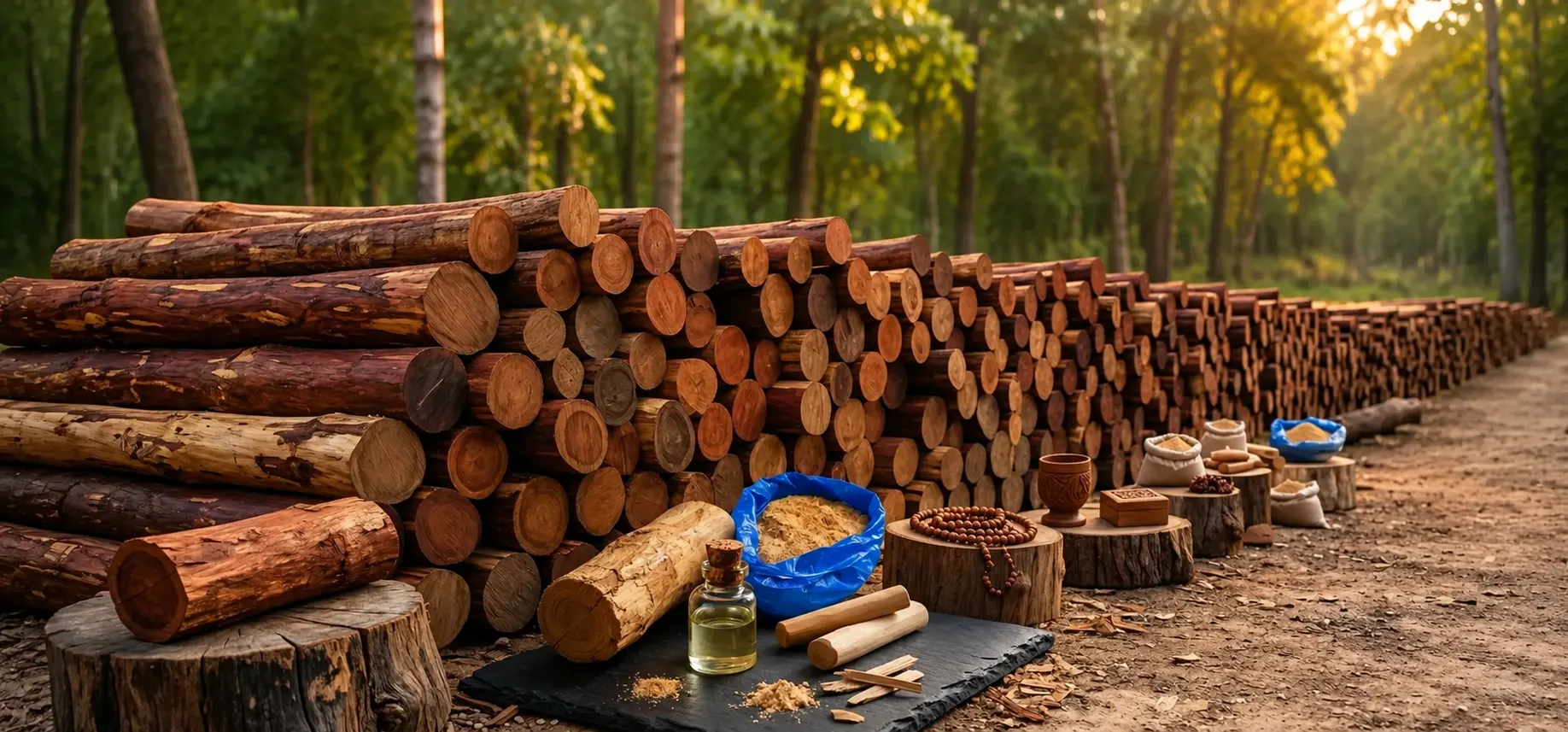
Quick answerRed sandalwood’s value is grade-driven, not flat-rate: heartwood content, density, log dimension, colour and grain pattern all affect what a lot fetches. A particularly prized feature is wavy or figured grain, which can command a significant premium in high-end markets. Understanding grading explains why there’s no single "price per kg" and why a mature, well-grown plantation aims for quality, not just volume. This article outlines the main grading factors honestly, without quoting specific figures that would be outdated and unverifiable out of context.
Value is grade-driven
There is no flat rate for red sandalwood. What a lot is worth depends on its grade, a combination of factors assessed at sale, which is why headline "price per kg" claims mean little without grade and date.
The main grading factors
Heartwood content, the core of the value.
Density and colour, deeper, denser wood grades higher.
Log dimension, larger, sound logs are worth more.
Grain pattern, wavy or figured grain can command a premium.
Why wavy grain matters
Figured or wavy grain is especially prized in high-end furniture and carving markets and can attract a notable premium. It’s one reason quality, not just tonnage, is the goal of a well-managed plantation.
The investor implication
Because grade drives value, a mature plantation optimises for healthy, quality heartwood over the long term. For how graded timber is actually sold, see how red sandalwood is sold at auction.
SH
Shree Editorial Desk
Shree Properties & Projects, editorial
Run the ten checks on us
Request the due-diligence pack and hold us to this guide.