
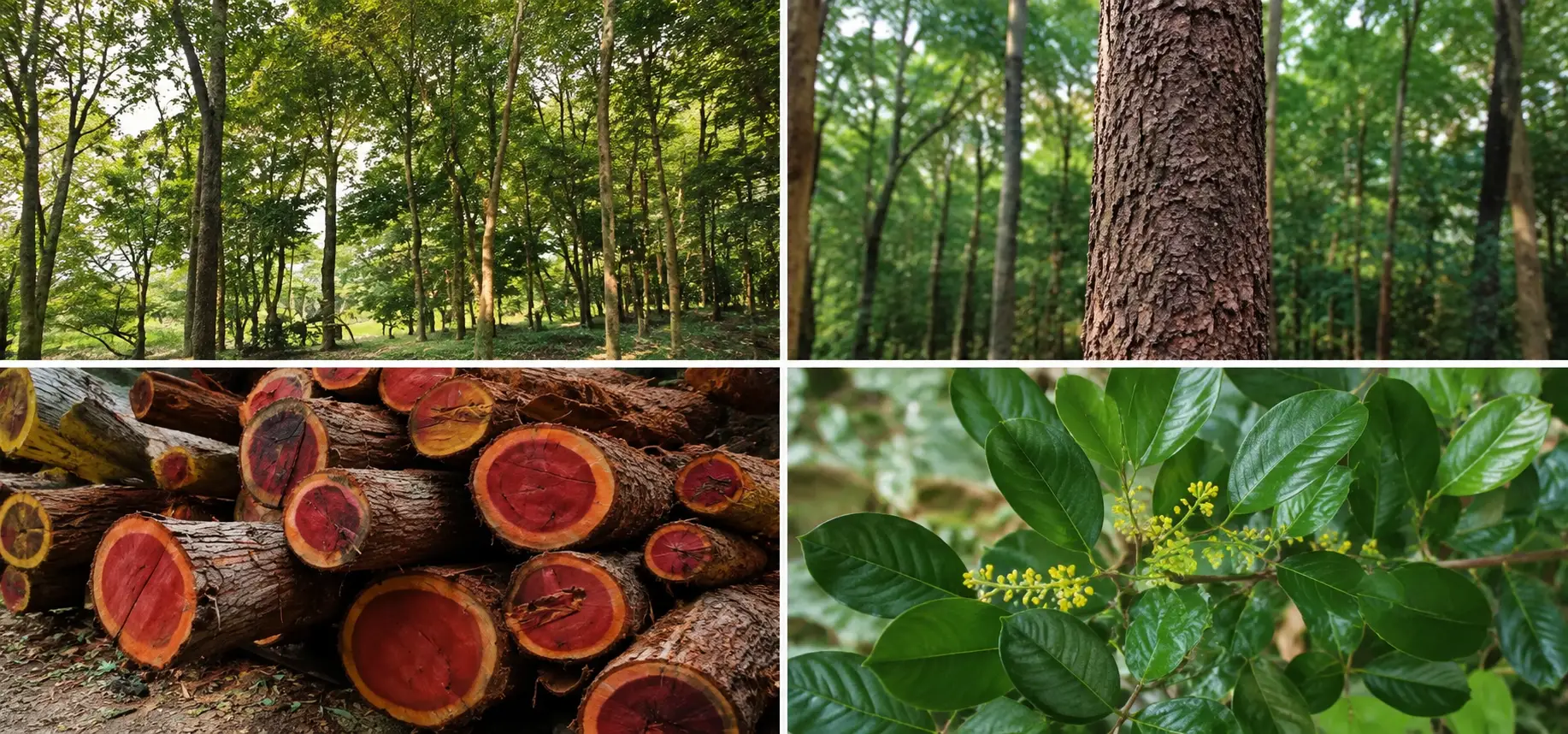
Soil: drainage above all
The single most important soil factor is drainage. Red sandalwood favours well-drained red laterite and gravelly loams and suffers badly in heavy, waterlogged clay. Depth and texture are tested before planting; a parcel that fails the drainage test is rejected regardless of price.
Climate: hot and semi-arid
The species is adapted to a hot, semi-arid climate with a distinct dry season. Once established, it is notably drought-hardy, an advantage in the districts where it grows, though young trees still need irrigation support through their first years.
Why location mirrors the natural range
- The natural range sits in the southern Eastern Ghats (Seshachalam and adjoining hills).
- Plantation districts are chosen where soil and climate match that range.
- This is not marketing geography, it is agronomy: the species does best where it evolved.
What this means for investors
When you evaluate a plantation, ask where it is and why. A project on the right red soils in the right climate belt has a real agronomic basis; one placed for convenience on unsuitable land does not. See our land-selection page for the five gates every parcel must pass, and the locations pages for the soil and climate profile of each district.